
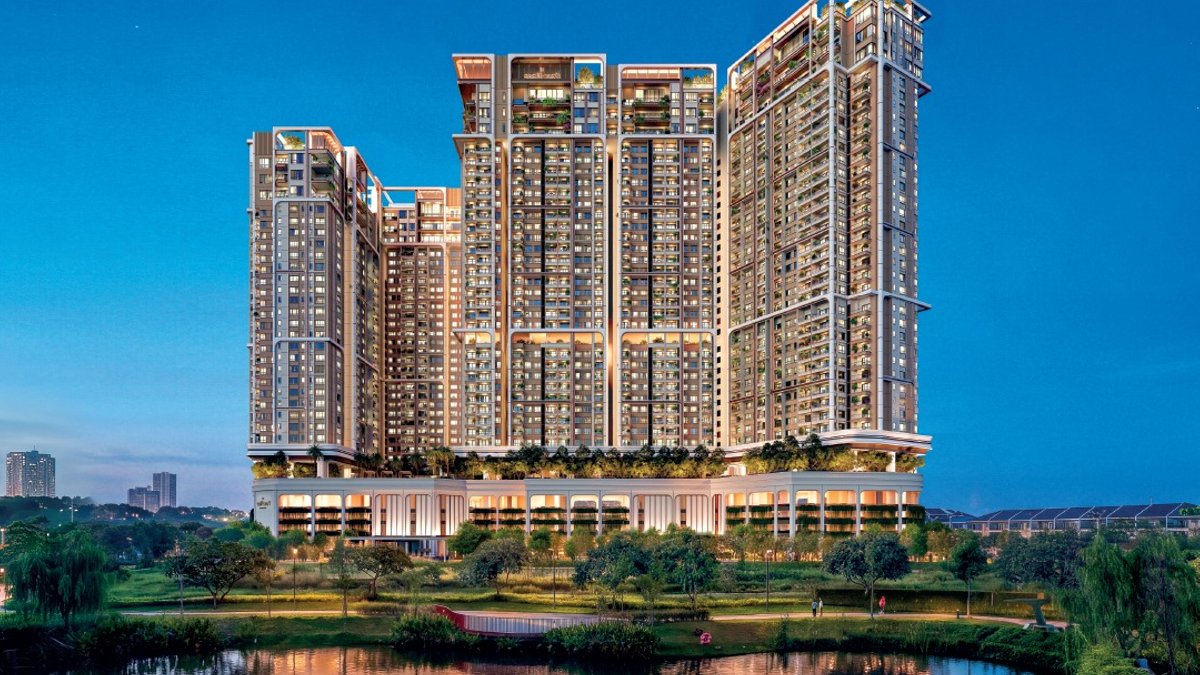
Le Parc Place has officially launched as the latest addition to the expanding skyline of ParkCity Hanoi. Developed by Vietnam International Township Development JSC, a subsidiary of ParkCity Group, the new condominium development marks a significant step for the township, which sits on land in Hanoi’s Ha Dong district that was little more than paddy fields criss-crossed by transmission lines 15 years ago. Datuk Joseph Lau, the CEO of ParkCity Group, recalls that reaching the site from the city centre once took up to three hours.
Connectivity has improved significantly since then. Upgraded road networks, the Hanoi Metro and the Bus Rapid Transit system have shortened travel times to the area. The township has evolved into a community anchored by landscaped parks, international schools, retail offerings and a steadily expanding residential population.
Launched on July 18, the project includes 802 units spread across four towers reaching up to 35 storeys. It is the largest residential development in the township so far. Unit sizes range from 107.6 to 516.8 sq m, featuring six main layouts that include sky villas with private gardens. The design of the development is informed by the Le Château concept, presenting a contemporary interpretation of French-inspired modern classical architecture, and the property fronts the township’s Central Park. Enjoying seamless access to established amenities, the location provides convenient reach to The LINC neighbourhood mall, ParkCity Club Hanoi and the International School ParkCity Hanoi.
The development targets a wide demographic, from young families buying their first home to multi-generational households needing more space. Prices sit at approximately US$4,200 per sq m, or about RM17,123 per sq m. The site covers 1.62ha at the intersection of ParkCity Boulevard and Le Trong Tan 1. Unlike many condominium developments in Vietnam where retail components are integrated into residential towers, ParkCity Group has maintained a clear distinction between private homes and commercial activity, a concept first introduced with Park Kiara in 2019. Additionally, the allocation of dedicated parking bays to homeowners—a feature relatively uncommon in Vietnam—has been continued here following its positive reception in previous projects. While Malaysian buyers generally expect completed interiors, affluent Vietnamese purchasers often prefer these premium residences delivered as bare units to customise the interiors according to personal tastes.
Related: Stocks climb after tech earnings soothe AI fears
This launch follows the successful release of Parc Régent last year, where all 309 high-rise units were reportedly taken up soon after the debut. That response reinforced the developer’s confidence in both the Hanoi market and the township model they have spent more than a decade building. Lau notes that good demand remains in the Vietnamese market for this kind of product, attributing the success largely to the complete township environment that has been established over the last 15 years.
A Borrowed Blueprint
Lau says the project represents a continued evolution of the company’s philosophy. He took the blueprint used for Desa ParkCity in Kuala Lumpur and adapted it for the Vietnamese market. The approach keeps the core philosophy intact while adjusting for local requirements. Lau believes successful townships are built by shaping places people aspire to live in long before they decide to buy a home. He points to Hanoi’s distinctive French colonial architecture and historic streets as qualities worth preserving even as redevelopment gathers pace, noting that the developer sought to build a township reflecting international standards while remaining rooted in the local environment.
“You don’t copy, but the idea of what you want is there,” Lau explains. “The product is the same. You adapt little things for local requirements, but the philosophy is the same.”
Exporting a township model requires careful attention to how residents actually live. While the developer imported the DNA of its flagship project in Malaysia, it also had to account for specific living habits in Hanoi. One of the earliest observations was that residents made far greater use of communal facilities than initially expected. That insight influenced the planning of Le Parc Place, which features an 8,000 sq m landscaped amenity deck on Level 5 complemented by additional gardens on the ground floor and a sky garden on Level 15. The development offers more than 40 resort-style facilities, including indoor resident lounges, private dining rooms, a library, a games room, co-working spaces, golf simulation rooms, wellness facilities and a gymnasium. Outdoor amenities range from lap pools and pickleball courts to event lawns, barbecue decks and children’s play areas.


