
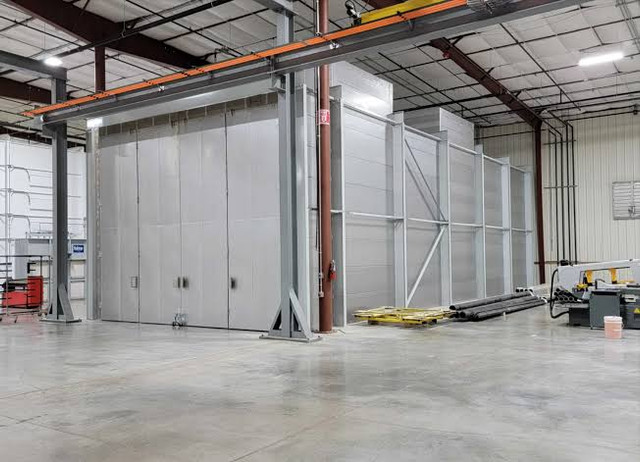
Shop owners often learn quickly that curing powder is not as simple as heating a metal box. A finish may look acceptable at first, yet fail later if the part never reached the right temperature for the right amount of time. Reliant powder curing ovens are built for production environments where airflow, heat control, safety, and durability matter just as much as the powder being sprayed.
Basic units leave cold spots while Reliant Ensures Completely Uniform Airflow
Cold spots are one of the biggest differences between basic ovens and true industrial curing equipment. In lower-end units, heated air may collect near certain areas while corners, lower sections, or crowded rack spaces stay cooler. That uneven heat can leave parts under-cured, even when the oven display shows the correct air temperature.
Uniform airflow helps solve that problem by moving heat around the entire chamber instead of letting it sit in one zone. Reliant powder curing ovens are designed to circulate heated air more consistently around racks, parts, edges, and recessed surfaces. Better air movement helps coating shops produce stronger, more repeatable finishes across full batches.
Reliant Uses High-density Insulation That Locks in Heat Basic Ovens Lose
Insulation affects how hard an oven must work to hold temperature. Basic ovens often lose heat through thin walls, weak panel joints, or low-grade insulation, especially during long cure cycles. That heat loss can increase energy use and make temperature recovery slower after parts are loaded.
High-density insulation helps hold heat inside the chamber where it belongs. This makes the oven more stable during daily production and reduces wasted heat around the workspace. For shops comparing powder coating equipment, insulation quality can have a direct effect on operating cost, worker comfort, and cure consistency.
Simple Dials Guess the Temperature but Digital PLCs track exact cure profiles
Basic control panels may rely on simple dials or limited temperature readouts. Those controls can make it harder to repeat the same cure schedule from one batch to the next. A few degrees or a few minutes can matter when powder manufacturers specify exact curing requirements. Digital PLC controls give operators better command over temperature settings, timers, and cure profiles. These systems can help teams run repeat jobs with fewer adjustments and less guesswork. Reliant powder coating equipment gives shops more control when they need clear settings, dependable cycle timing, and better production discipline.
Flimsy Walls Warp over Time Whereas Heavy-gauge Steel Structures Stand Rigid
Lightweight oven construction may seem acceptable in the beginning, but repeated heating and cooling can expose weak materials. Thin panels may flex, warp, or lose alignment after years of use. Once the structure changes shape, doors may not seal as well, panels may leak heat, and airflow can become less predictable. Heavy-gauge steel construction gives an oven stronger support under industrial conditions. Rigid walls, stronger framing, and better panel integrity help the equipment hold up during daily loading, unloading, and heat cycling. Coating shops reviewing Reliant powder coating equipment for sale often look beyond price because structural strength affects long-term reliability.
Reliant Burners Easily Push Heat into Dense Parts That Stall Standard Ovens
Dense metal parts absorb heat slowly. Thick steel brackets, welded frames, equipment parts, and large fabrications may stall a basic oven because the air warms faster than the part itself. If the metal never reaches the required cure temperature, the coating may lack proper adhesion or durability.
Strong burner performance helps the oven recover heat after heavy parts enter the chamber. Reliant powder curing ovens are built for workloads where part mass matters, not just chamber temperature. That makes them useful for shops coating industrial parts that demand deeper, more dependable heat transfer.
Basic Boxes Lack Code Stamps but Engineered Models Meet Strict NFPA Standards
Safety standards separate professional curing equipment from homemade or hobby-style setups. Basic boxes may lack proper documentation, ventilation design, flame safety controls, or recognized compliance features. That can create concerns with inspections, insurance, and safe daily operation.
Engineered industrial ovens are built with safety requirements in mind from the start. NFPA standards help guide proper oven design, ventilation, combustion safety, and operating protections. Reliable powder coating equipment should give shop owners confidence that the oven fits a real production environment, not just a temporary setup.
Standard Floors Buckle Under Heavy Carts That Roll Easily on Heavy-duty Tracks
Floor strength matters when loaded carts move in and out all day. Basic oven floors may not handle heavy racks, dense batches, or repeated wheel traffic without bending, dragging, or wearing unevenly. Poor cart movement slows production and increases the chance of damaging freshly coated parts.
Heavy-duty tracks give operators smoother movement and safer handling. Rolling carts should enter and exit the oven without fighting misalignment, weak flooring, or overloaded rails. Reliant powder coating equipment is designed to support the kind of part handling that busy finishing shops need during daily production.
Reliant Exhaust Fans Clear Dangerous Fumes That Trap Inside Hobby Setups
Exhaust systems do more than move hot air. Curing can release fumes, vapors, combustion byproducts, and airborne compounds that need controlled ventilation. Basic hobby setups may trap these contaminants or vent them poorly, creating a less safe and less reliable work environment.
Proper exhaust design helps clear the chamber while supporting safer operation and better process control. Reliant Finishing Systems delivers Reliant powder curing ovens built for shops that need stronger airflow, safer ventilation, dependable heating, and equipment designed for real production demands. Their oven line gives finishing operations a practical way to upgrade from basic curing setups to systems built for consistency, durability, and professional coating results.


