
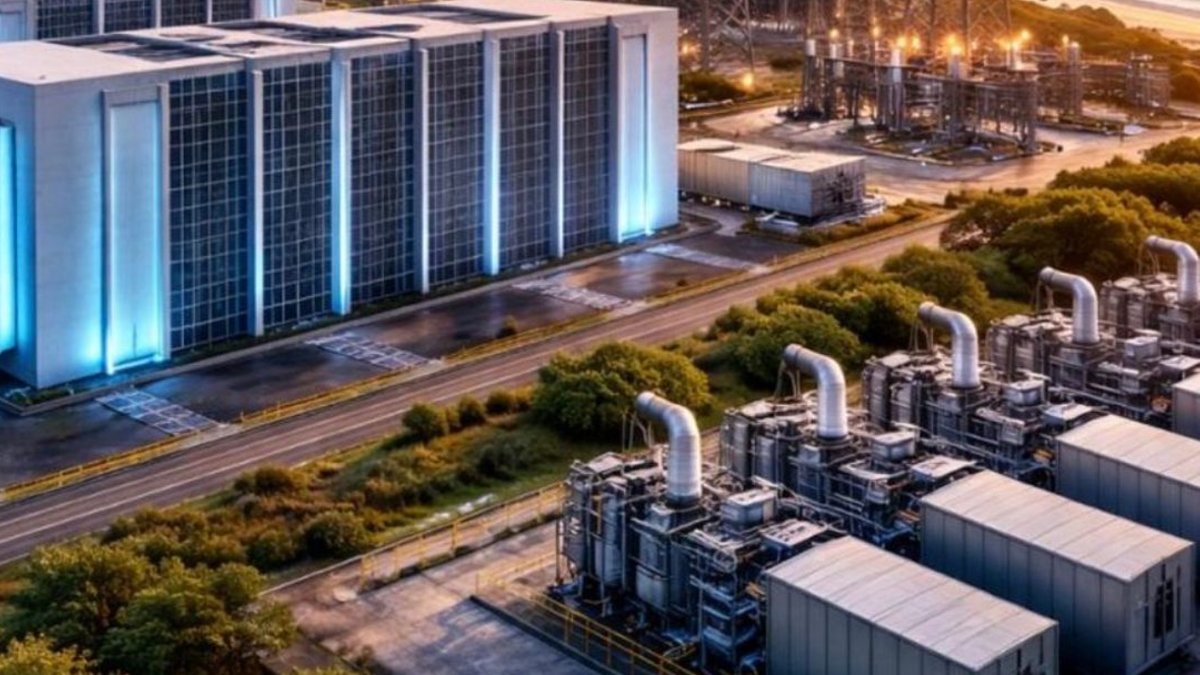
A Greek energy firm is proposing construction of one of the world’s largest AI data centers in Kenya, deploying an offshore power platform to avoid the country’s grid limitations—a move that contrasts sharply with the stalled Microsoft-G42 initiative. Amaco Energy Group’s plan for a $1.5 billion facility in Mombasa would generate its own electricity through a liquefied natural gas system called Hercules, eliminating reliance on Kenya’s national power network. The company’s CEO, Dr. Theodore Theodoropoulos, met with Kenyan authorities this week to pursue approval, framing the project as a potential foundation for East Africa’s technology sector.
Grid Constraints Drive Alternative Approaches
This proposal follows the suspension of Kenya’s most prominent AI infrastructure bid, the Microsoft-G42 data center in Olkaria, due to power requirements. Initially announced in 2024 with a $1 billion budget, the Olkaria project was scaled down after revealing it would demand 1,000 megawatts, nearly 33% of Kenya’s total generation capacity of 3,000 megawatts. President William Ruto confirmed in May 2026 that the grid could not accommodate such demand without triggering widespread blackouts for households and businesses.
Amaco’s Hercules system avoids this problem by producing power independently offshore, combining gas-fired generation with AI-managed load balancing. The company suggests the platform could even supply excess electricity to Kenya’s grid, though critical details, including the exact location, funding structure, and construction timeline, remain undisclosed. Whether the data center will be built on land or the power unit will operate at sea is also unclear, a distinction that would significantly alter engineering and permitting requirements.
While the $1.5 billion price tag draws attention, the project’s early stage means its true value hinges on reliable power delivery during operation, maintenance, and equipment failures. Amaco has not revealed the intended server capacity, energy efficiency targets, or backup systems, leaving key technical questions unresolved.
Read Also: Kenya mourns former judge Joseph Mutava amid career controversies
The initiative also raises environmental concerns. Kenya’s domestic grid already prioritizes renewables and geothermal sources, and an LNG-powered offshore platform would introduce fossil fuel generation. Amaco has not explained how it plans to align Hercules’ emissions profile with Kenya’s renewable-focused energy strategy.
Competition for AI Infrastructure Across Africa
Kenya’s pursuit of AI data centers reflects a broader African competition to host hyperscale computing facilities. The continent seeks not only cloud providers but also the electricity, fiber networks, land, and water needed to support them. Kenya holds advantages, strong tech industry connections, international bandwidth links, and abundant geothermal resources, but the Olkaria project’s delay highlights a growing obstacle: power supply reliability. As AI demand expands, electricity availability may determine where future hyperscale investments are located.
Amaco’s offshore model presents one potential solution. Whether it can deliver steady power at scale, while addressing Kenyan regulations, environmental assessments, and financing challenges, remains unproven. The company has proposed adapting Hercules for other African markets, from geothermal-linked setups in Kenya to solar-storage combinations in sun-rich regions. By 2030, Amaco targets 4 gigawatts of total capacity, though the Mombasa project’s specific contribution to that goal has not been disclosed.


