
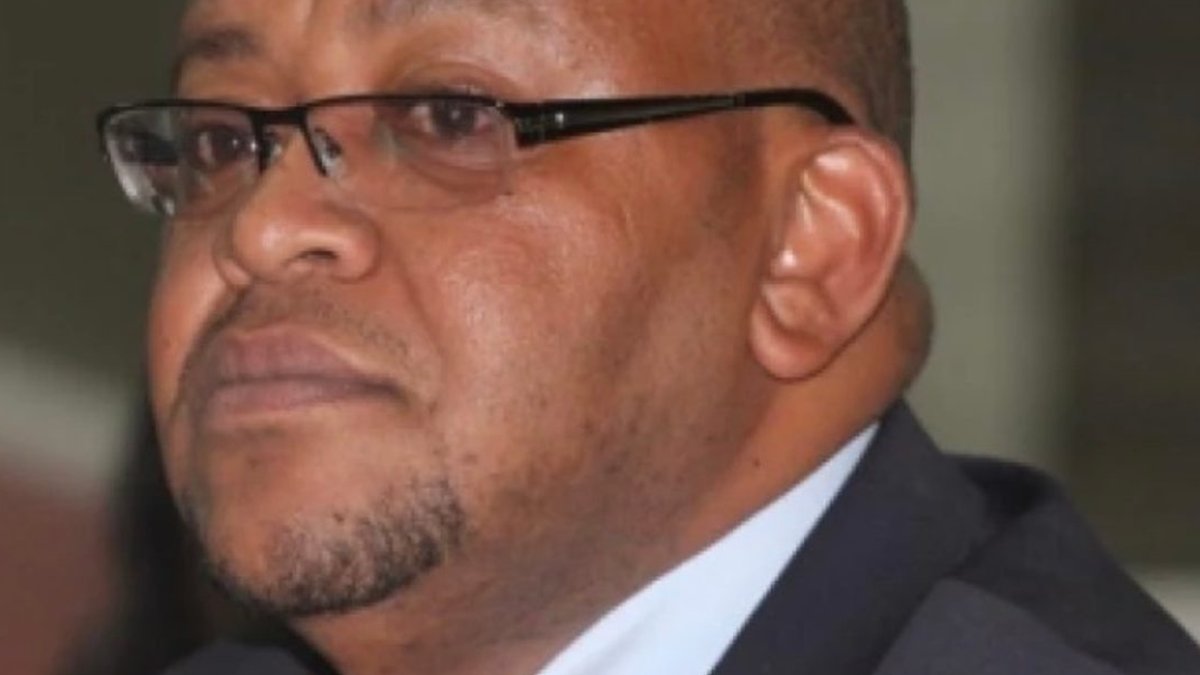
Former High Court Judge Joseph Mbalu Mutava died on Saturday, August 22, 2026, at the age of 75, closing the book on one of the more turbulent judicial careers in Kenya’s post-2010 constitutional order. He collapsed at his rural home in Kithasyu, Makueni County, hours after attending a burial in the neighborhood, and was pronounced dead on arrival at Makindu Sub-County Hospital. His body has since been moved to Lee Funeral Home in Nairobi as the family prepares for his final rites. He is survived by his wife, Kibwezi East MP Jessica Nduku Mbalu, and their children — a family already well known in Kenyan public life, now handling grief in full public view.
Mutava’s death leaves behind a family already well-known in Kenyan public life, including his wife, Jessica Nduku Mbalu, the Kibwezi East Member of Parliament, and their children. Public tributes have poured in from political figures, though few have addressed the controversies that marked his later years.
The rise and fall of a judicial career
Mutava’s appointment to the High Court on August 23, 2011, through a competitive recruitment process sanctioned by the Judicial Service Commission — part of the wave of judicial appointments that followed the 2010 Constitution’s overhaul of the Judiciary. He was posted to the Milimani Commercial Courts in Nairobi, and before joining the bench had built a career as a legal adviser, including work for the National Bank of Kenya. Colleagues who worked with him in those early years describe a measured, “soft-spoken” jurist — a characterization that would resurface, almost ironically, in coverage of the scandal that would come to define his tenure.
Goldenberg Scandal Taints Judicial Career
The key moment arrived in 2013, when the Judicial Service Commission recommended forming a tribunal to investigate allegations tied to the Goldenberg scandal, Kenya’s largest post-independence financial fraud. An estimated Sh5.8 billion was embezzled from state coffers between the late 1980s and early 1990s through fabricated gold and diamond export claims. Mutava’s involvement stemmed from a judicial review application linked to Kamlesh Pattni, a central figure in the scandal. The JSC accused him of assigning the Pattni case file to himself outside the standard rotation system and later acquitting Pattni despite ongoing investigations into his own conduct.
Read Also: Presidential Jet Returns with New Technology
A tribunal, years of legal battles, and a unanimous ruling
President Uhuru Kenyatta appointed the tribunal in 2013, with David Maraga, then a Court of Appeal judge and later Chief Justice, serving as chair alongside Maureen Odero, David Majanja, Omesh Kapila, and Professor Patricia Mbote. Mutava initially contested the tribunal’s authority, arguing its composition violated the constitution. His legal challenges stalled proceedings until the Court of Appeal overturned a High Court decision that had blocked the inquiry, allowing the tribunal to proceed.
By the time the tribunal issued its verdict in September 2016, it had reviewed 11 allegations of misconduct. A subcommittee led by Supreme Court Judge Smokin Wanjala dismissed eight of these, but three stood: that Mutava had irregularly and, in collusion with other parties, caused the Pattni file to be assigned to himself without the knowledge of the duty judge, that he had interfered with the work of a fellow judge, Justice Leonard Njagi, who later swore an affidavit supporting the claims, and that his conduct in a related dispute between the Kenya Airports Authority and World Duty Free, a Pattni-linked company, was also found wanting.
The tribunal determined that Mutava’s actions constituted gross misconduct under Article 168(1) of the Constitution and recommended his removal. He appealed the decision to the Supreme Court, where a panel led by Deputy Chief Justice Philomena Mwilu, alongside Justices Mohamed Ibrahim, Jackton Ojwang’, Isaac Lenaola, and Njoki Ndung’u, unanimously upheld the tribunal’s findings in March 2019. Notably, Maraga recused himself from the Supreme Court hearing, having chaired the original tribunal.
Mutava’s prolonged legal battles had delayed the process for years, but the final ruling was decisive. The case placed his name back in the headlines just months before his death, a reminder that the questions raised by the tribunal in 2016 had never fully receded from his public reputation.
New Bribery Allegations Before His Death
The scandal’s implications extended beyond the judiciary. In March 2026, just months before his death, Mutava and three associates were arrested by the Ethics and Anti-Corruption Commission over allegations of soliciting a Sh10.4 million bribe to influence a commercial dispute involving a former Cabinet Secretary. All four were released on Sh200,000 cash bail each.
Read Also: KEBS Under Scrutiny as Fake Alcohol Floods Kenya
Tributes began immediately after his death, with Wiper Patriotic Front leader Kalonzo Musyoka praising him as a “distinguished public servant” who had served the country with honor, integrity and quiet distinction. Former Machakos Senator Johnson Muthama, who confirmed the death publicly, called him a “long-time family friend.” President William Ruto also extended condolences.
Early reactions notably avoided direct mention of the tribunal’s findings or the EACC case. Instead, discussions centered on Mutava’s earlier career, his family connections, and the political influence of his survivors, particularly his wife, a longtime legislator. This pattern reflects a broader tendency in Kenyan public mourning, where immediate grief often overshadows contentious aspects of a person’s legacy, especially when their family holds significant power.
Legacy of Accountability and Controversy
The tribunal process that removed him had been a defining test of Kenya’s post-2010 judicial accountability system. For the first time, the mechanism intended to hold judges responsible had succeeded, unanimously affirmed by the Supreme Court. Yet Mutava’s life story resists straightforward interpretation.
Before his judicial appointment, he was widely regarded as a skilled lawyer, respected in professional circles. He was also a dedicated family man, and his loss will be most deeply felt by those closest to him. However, his tenure as a judge was marred by findings that his conduct had undermined the trust placed in his office, particularly in a case tied to one of Kenya’s most infamous financial crimes. The allegations resurfaced in 2026, just months before his death, proving that some questions about his legacy would persist.


