
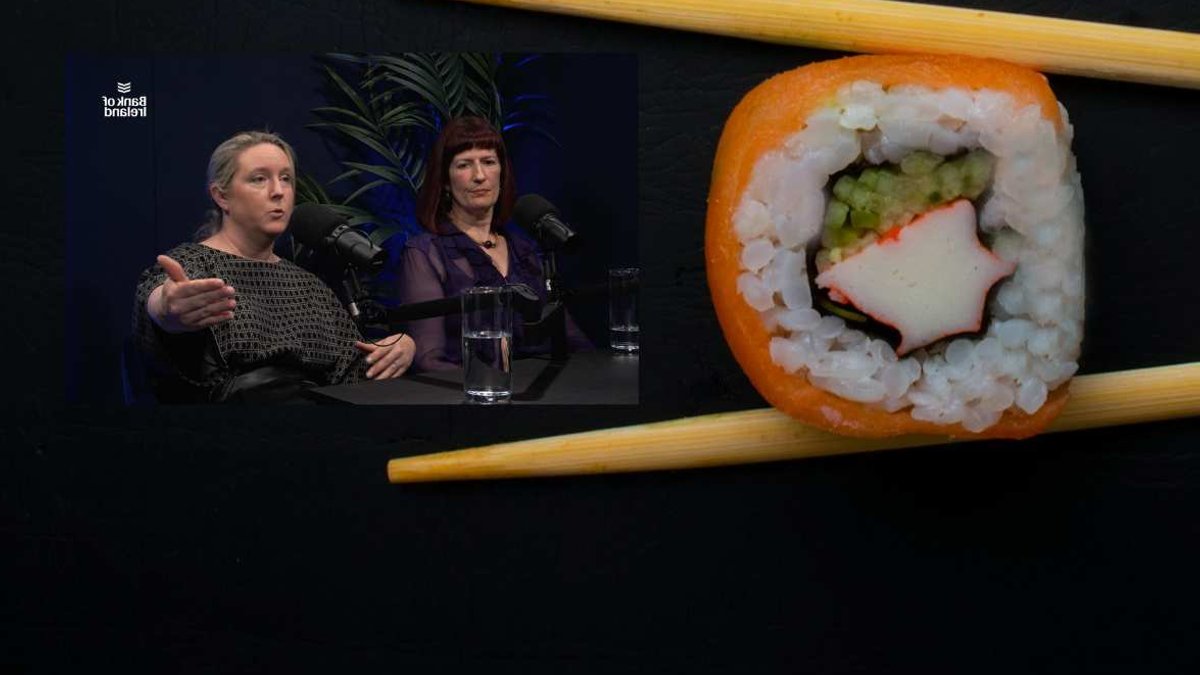
Irish entrepreneur Ciara Troy transformed her small farmers’ market sushi venture in Greystones into a nationwide brand now stocked in supermarkets and service stations. Two decades later, she and Lucy Ryan, Bank of Ireland’s food and beverage sector leader, discuss the essential steps to launch and sustain a food business.
A journey from market stall to production facility
Back in July 2006, a young entrepreneur launched her food operation at the Meridian Centre in Greystones, County Wicklow, crafting sushi from scratch. Her initial equipment included a basic Tefal rice cooker, a bamboo mat for shaping, and a handheld fan to polish the rice. With no formal business strategy, no capital, and limited experience, she admits she was essentially figuring things out as she went.
From Market Stall to National Brand
Her first supplier was Stephen, a seafood vendor from Harvey Seafoods who stood beside her stall. Nearly two decades later, Oishii Foods supplies fresh sushi to retail outlets nationwide, supports 75 employees, and operates from a custom-built factory in Dublin 12. After Harvey Seafoods was acquired by KishFish, the company retained Oishii as a customer. Troy and Stephen still meet annually during the holiday season.
The company’s origins trace back to a semester Troy spent studying in Tokyo as part of her Trinity College Dublin degree. Upon returning to Ireland, she became convinced the country lacked a comparable culinary offering.
“I just felt so good on the diet,” she recalls. “It was rice-based, so tasty and delicious. Over here at the time there was a lot of bread, French sticks, whereas over there it was completely different.” That summer, she launched Oishii, selling Japanese cuisine at local markets. Even today, she concedes customers frequently ask her to spell the brand name.
The early months served as a critical testing phase. Farmers’ markets provided immediate customer feedback at minimal cost, helping her determine pricing, popular items, and what products to discontinue. She experimented with lemon and green tea drizzle cakes, gyoza dumplings, chicken skewers, and miso soup—most of which were eventually phased out. Only the sushi remained consistently in demand.
Related Post: Ireland’s businesses urged to treat sustainability as growth driver
“It was a trail of discovery,” she says. “I had a George Foreman grill and I used to baste the chicken skewers. Shoestring, dynamic, a lot of hard work.”
The turning point in her business journey came unexpectedly. Roughly 18 to 24 months in, she narrowly avoided a collision while driving her refrigerated van after an early-morning kitchen shift.
A Near Miss That Changed Everything
“Only he honked the hell out of me,” she says of the van in her blind spot. “We would have collided. I was shaking, and I just thought, I can’t continue like this. I’m running on empty.” Shortly after, she hired her first sales representative.
Troy’s financial awareness developed through a simple exercise with her brother-in-law. He asked how many trays she produced weekly, the hours worked by staff, and the cost of ingredients. After deducting expenses, the math revealed losses at seven trays per hour. Breaking even required producing 15 or 16 trays, while profitability began around 18 to 20.
This analysis led her to the Wicklow Enterprise Board, which provided financial guidance and helped her secure funding. Bank of Ireland, where she already held a personal account, became involved in the process.
Using Data to Find the Path to Profit
The initial funding allowed her to expand into a larger kitchen in Bray and purchase her first desktop sushi-making machines, increasing output from seven to double-digit trays per hour. A subsequent move to the Spade Enterprise Centre in Smithfield—supported by Dublin’s Local Enterprise Office and Bank of Ireland—further boosted capacity and efficiency. Each transition followed a consistent approach: improving efficiency before scaling up.
Related Post: Google, Bank of Ireland Offer 10,000 Free AI Training Spots
Ryan highlights additional resources food businesses frequently overlook, including Local Enterprise Offices, county council grants, and organizations like Bord Bia and Enterprise Ireland. These provide mentorship, networking opportunities, and access to funding that can be key in the early stages.
Operating a perishable food business demands extremely tight margins and minimal room for mistakes. Oishii’s products move through a cold chain involving external handlers, transporters, and retailers, none of which the company directly controls.
Financial Literacy and Strategic Expansion
Each move followed the same logic: efficiency first, then scale. Ryan notes that food businesses often fail because they do not understand their cost base. Founders know they have a good product but are less certain about production costs, retailer margins, or logistics expenses. Troy’s financial education ensured she knew what she could be left with after paying herself.
Scaling Up with Automation and Efficiency
The labor shortage in food production makes automation increasingly appealing. Despite employing 75 staff who still assemble sushi by hand, the company has optimized operations at its Dublin 12 facility, consolidating purchases and refining processes.
The company received an unannounced audit the day before this conversation. She describes such inspections as twice-yearly events, given that sushi is classified as high-risk food.
Guidance for aspiring food entrepreneurs
Troy’s advice to new food business owners is pragmatic: prepare for challenges before they arise. Understand broader market forces, not just product details. Utilize available support systems and seek help sooner rather than later.


